Τα 20 καλύτερα φυσικά μνημεία Bolanden
Το τοπίο της περιοχής Bolanden είναι ένα υπέροχο μέρος για εξερεύνηση — κάτι που μπορείτε να βιώσετε καλύτερα επισκεπτόμενοι ένα από τα 20
πανέμορφα φυσικά μνημεία Bolanden. Για να βρείτε αυτό που σας ταιριάζει, δείτε όλες τις λεπτομέρειες που χρειάζεστε και σχεδιάστε καλύτερα την επόμενη υπαίθρια περιπέτειά σας!
Τελευταία ενημέρωση: 28 Σεπτεμβρίου 2026
Adlerbogen Viewpoint
Highlight • Σημείο θέας
Εμφάνιση μετάφρασης
Συμβουλή από

Königsstuhl (Donnersberg Summit)
Highlight • Κορυφή
Εμφάνιση μετάφρασης
Συμβουλή από
Εγγράψου τώρα για να ανακαλύψεις μέρη σαν αυτό
Λάβε προτάσεις για τα καλύτερα single tracks, κορυφές και πολλά ακόμα συναρπαστικά υπαίθρια μέρη.
Hirtenfels Viewpoint
Highlight • Σημείο θέας
Μετάφραση από Google •
Συμβουλή από

Falkenstein Castle Ruins
Highlight • Κάστρο
Μετάφραση από Google •
Συμβουλή από
Rosenthal Monastery Ruins
Highlight • Ιστορικός χώρος
Μετάφραση από Google •
Συμβουλή από

Εγγράψου δωρεάν για να ανακαλύψεις ακόμα περισσότερα φυσικά μνημεία Bolanden.
Έχεις ήδη λογαριασμό;
Ξεκίνα σήμερα με έναν δωρεάν λογαριασμό
Η επόμενη περιπέτειά σου σε περιμένει.

Συμβουλές από την κοινότητα

Beautiful, well-restored castle ruins with a great view. There is also a place to stop for refreshments right at the castle.
4
1
There is a shelter at the Hirtenfels. From there you have a great view of the surroundings and the Palatinate Forest. Right next to it is the Kosakenfels.
11
0

The Hirtenfels with its 630m above sea level is well integrated into a beautiful hiking tour from Dannenfels over the Adlerbogen and Ludwigsturm. From the summit of the Hirtenfels you have a wonderful view of the Palatinate.
9
0

The monastery was founded in 1241 by Count Eberhard IV. von Eberstein (earlier count Eberhard II.), lord of Stauf, and his wife Adelheid von Sayn. Eberhard von Eberstein was the brother of Speyer Bishop Konrad von Eberstein and a cousin of St. Hedwig. He was descended from the Andechser family on his mother's side and was related by marriage to the Leininger and the Raugrafen through his two sisters. His nephew Raugraf Eberhard I, Bishop of Worms, consecrated the early Gothic church of the Rosenthal monastery founded by his uncle on May 22, 1261. In October of that year, the bishop's brother Raugraf Heinrich I († 1261) was buried there; the gravestone is preserved in the church ruins. According to the Regensburg Chronicle by Carl Theodor Commoner, he was the knight who corresponded with Duchess Maria of Brabant, which is why, out of unfounded jealousy, she was beheaded in 1256 on the orders of her husband Louis the Strict of Bavaria.[1] History of the monastery The church ruins from the south (2014) Church ruins from the inside Gravestone of the monastery founder Eberhard von Eberstein in the Rosenthal church ruins Many daughters of the landed nobility entered the monastery. In 1496 it had 70 members, including 31 choir sisters, 14 lay sisters and 24 servants. The nuns brought the marriage property they were entitled to into the monastery community and other donations also fell to them. As a result, the convent had considerable property in the surrounding area and further afield, especially in Asselheim, Bechtolsheim, Breunigweiler, Göllheim, Guntheim, Hillesheim, Candlesheim, Lautersheim and in Sippersfeld. King Adolf of Nassau fell in the Battle of Göllheim on July 2, 1298 and was buried here. He was the great-nephew of the founder of the monastery and remained buried in Rosenthal for eleven years because his surviving opponent Albert of Austria refused to allow him to be buried in Speyer Cathedral. Only after his death could it be transferred to the cathedral in 1309. According to tradition, his wife Imagina von Isenburg-Limburg prayed in the Rosenthal monastery church while the battle was raging not far away. She later had the early Gothic royal cross erected at the place of her husband's death and lived to see it transferred to Speyer. In the Mainz Abbey Feud (1461/62), the convent under Abbess Anna von Lustadt († 1485) was affected. At the end of the 15th century, her successor Margaretha von Venningen († 1505) had the monastery church rebuilt in the late Gothic style, which also created the striking pinnacle tower. During the Palatinate Peasants' War, during the term of office of Abbess Barbara Göler von Ravensburg († 1535), the monastery was looted and devastated in 1525, but it was able to continue to operate; until finally in 1572 the 14th abbess, Elisabeth von Geispitzheim, ceded all rights to the then sovereign, Count Philip IV of Nassau-Saarbrücken, in the course of the Reformation. He had already banned the admission of new sisters and pushed for the convent to be closed. He dissolved the monastery, took ownership of the property and appointed a secular steward to manage and manage the property. In the period that followed, the monastery slopes served as a source of income for the changing lines of the ruling House of Nassau. Towards the end of the Thirty Years' War, Emperor Ferdinand III. restored the rights of the Cistercian Order. Under the Abbess of Königsbruck, Rosenthal was once again populated by nuns in the spring of 1646 and the complex was renovated. Citing the agreements reached in the Peace of Westphalia, the Counts of Nassau expelled the sisters from the monastery again in February 1651. It remained dissolved and was administered as a state domain. In 1794 the French confiscated the property and auctioned off parts of it. Mennonites settled there, continued to manage the former monastery property and lived in the monastery buildings, which they divided among the families. The church served as a quarry for them and they began to demolish the choir area. The Bavarian state put a stop to the work of destruction when the district administrator of the Kirchheim district office bought the church ruins in 1851 for the benefit of the Historical Association of the Palatinate and the Bavarian district government in Speyer. In 1863 it became the property of what was then the Rosenthal Association and today the Rosenthal and Surroundings Historical Association looks after the impressive complex.
4
0

Beautiful ruins of the former monastery church with an interesting history - for example, Emperor Adolph von Nassau, who fell in battle, was buried here for several years.
6
0

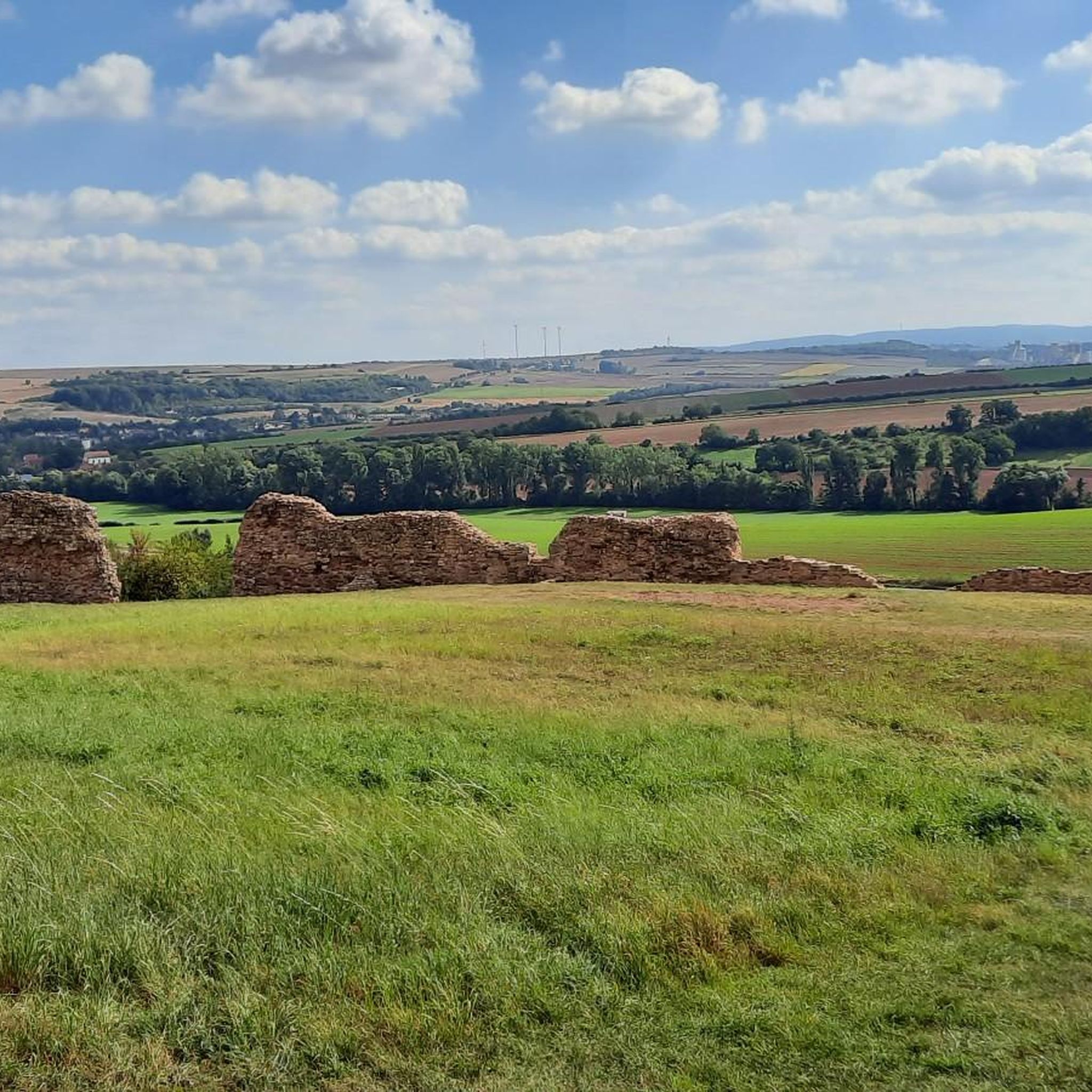
A beautifully preserved castle ruin with a great view and a castle room. It's worth a visit.
6
0

Very pretty castle ruins that were built on a volcanic vent. It is freely accessible, even now during C times. If you come out of the forest below at the bell tower / cemetery, you have a great view of the castle, but then you have to take a steep road up to the ruin (25%), it is practically in the middle of the village. There is also a castle tavern, currently only to-go, of course. In the castle there are also some nice seating areas for a rest.
9
1

Gigantic view. And I don't find the many wind turbines disturbing either. At least nicer than KKW's.
13
1
Τα πιο δημοφιλή αξιοθέατα Bolanden

Εμπνεύσου με την εφαρμογή komoot για κινητά


Ανακάλυψε περισσότερα
Επέκτεινε την αναζήτησή σου για τις καλύτερες σπηλιές βλέποντας αυτούς τους οδηγούς με τα κορυφαία Bolanden:
