Τα 7 καλύτερα σπήλαια Gräfenthal
Θέλετε να επισκεφθείτε ένα σπήλαιο Gräfenthal στην επόμενη περιπέτειά σας; Για να σας βοηθήσουμε να σχεδιάσετε καλύτερα την επόμενη υπαίθρια εμπειρία σας, συγκεντρώσαμε τα 7
καλύτερα σπήλαια της περιοχής Gräfenthal. Βασισμένη στις εμπειρίες άλλων χρηστών, κάθε σύσταση είναι αξιόπιστη — ώστε να σχεδιάσετε καλύτερα την επόμενη περιπέτειά σας.
Τελευταία ενημέρωση: 30 Μαΐου 2026
Rentschenbruch Slate Quarry
Highlight • Σπήλαιο
Μετάφραση από Google •
Συμβουλή από

Old Slate Mine Entrance
Highlight • Σπήλαιο
Εγγράψου τώρα για να ανακαλύψεις μέρη σαν αυτό
Λάβε προτάσεις για τα καλύτερα single tracks, κορυφές και πολλά ακόμα συναρπαστικά υπαίθρια μέρη.
Εγγραφή δωρεάν
Morassina Show Cave and Mining Museum
Highlight • Σπήλαιο
Μετάφραση από Google •
Συμβουλή από

Lehesten Cave with Pond
Highlight • Σπήλαιο
Μετάφραση από Google •
Συμβουλή από

Schieferstollen im Naturpark Thüringer Schiefergebirge/Obere Saale
Highlight • Σπήλαιο
Μετάφραση από Google •
Συμβουλή από

Εγγράψου δωρεάν για να ανακαλύψεις ακόμα περισσότερες σπηλιές Gräfenthal.
Εγγραφή δωρεάν
Έχεις ήδη λογαριασμό;
Ξεκίνα σήμερα με έναν δωρεάν λογαριασμό
Η επόμενη περιπέτειά σου σε περιμένει.
Σύνδεση ή εγγραφή
Συμβουλές από την κοινότητα

After the German armaments factories in Peenemünde on Usedom were severely damaged by the British Operation Hydra, the Nazi government decided to relocate war-critical factories underground. The factories found space primarily in old mines, railway tunnels, or newly constructed galleries. The Rentschen quarry, which had been used for slate mining and closed in 1925, was also designated for the "underground relocation." It was codenamed "Rutte." The Chemnitz-based company Reinecker was supposed to produce armaments on a 3,000-square-meter site. But this never happened. Reinecker found a home in another nearby slate mine. In total, around two dozen underground relocations were occupied or at least planned around Probstzella.
18
0

In the Rentschenbruch near Probstzella, the underground relocation for armaments production was approved under object number 1074, codenamed "Rutte." The Rentschenbruch underground mine had been idle since 1925. A production area of 3,000 square meters was planned for the expansion into an underground armaments factory. A fish name was chosen as the codename, fitting for a mine. The "Rutte" is a critically endangered bony fish from the burbot family and is also called "Trusche" in southern Germany. The Rutte only occurs in freshwater; other names include "Ruppe" or "Aalrutte." But that's just a side note. Originally, the Reinecker company from Chemnitz was supposed to move into the Rentschenbruch slate mine near Probstzella. However, this never happened, so Reinecker was ultimately housed in a bomb-proof slate mine (codenamed Rotfeder) nearby. At times, the Rentschenbruch was also closed for storage purposes by the Wehrmacht. The Geilenberg staff was also interested in the underground cavities of this slate mine. Source: http://www.stollenhausen.de/u-verlagerung-rutte/mobile/
2
0

Soot shale was mined here for the extraction of alum.
10
0

I think the Morasina is almost more beautiful than the Ferngrotten in Saalfeld. It's very spacious and if you're here it's a must.
1
0
You can hardly see the entrance, the way there is great.
3
0

I can fully agree with the "previous speakers". It is wonderful, varied, challenging, wonderful, breathtaking... in short: a wonderful hike that I will definitely do again at a different time of year🥾🥾
3
0
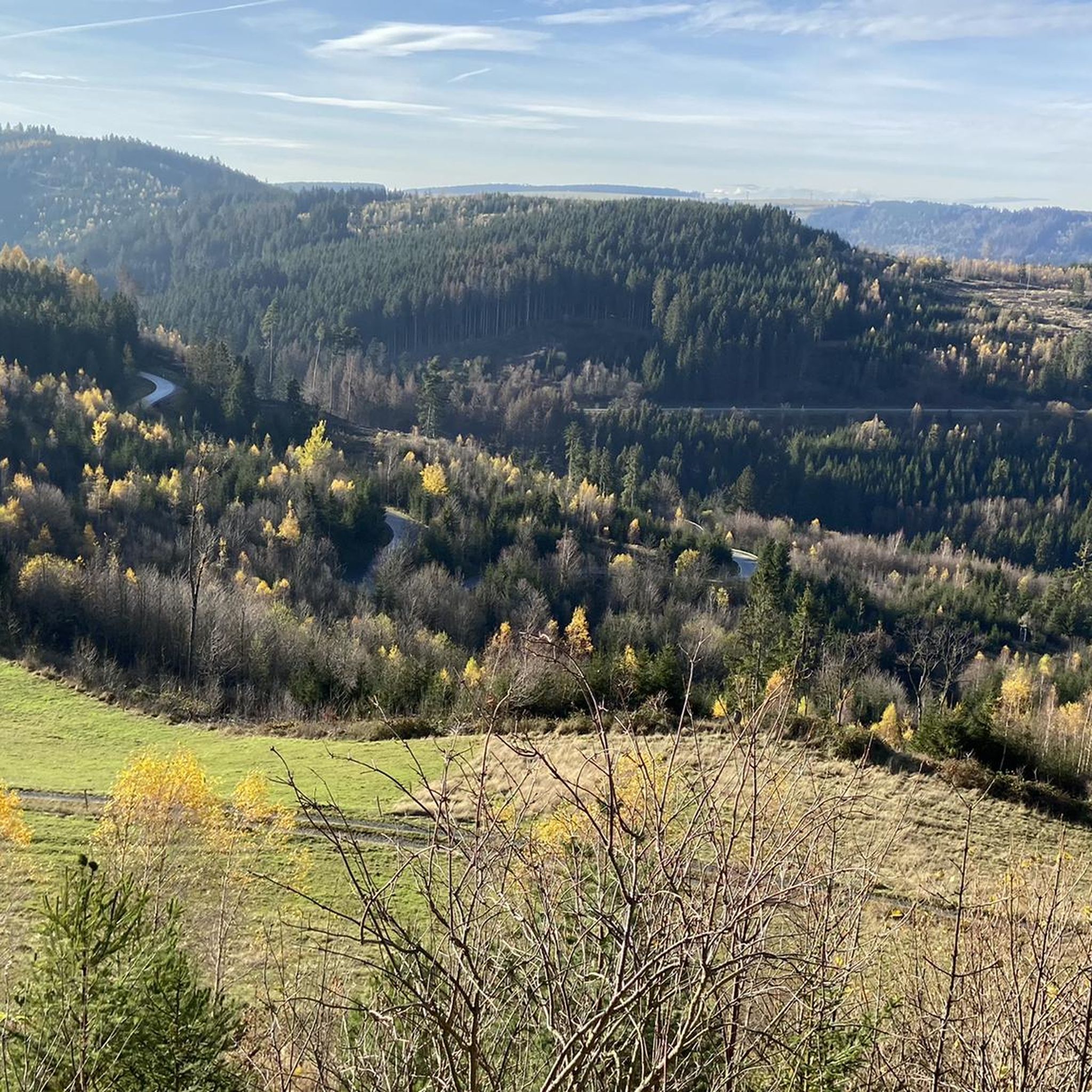
The path leads steeply uphill, becomes narrower, and finally winds in a zigzag on the slope under tall spruce trees. Halfway up, a brand new seating area invites you to take a break, a few meters away there is a hole in the mountain: the slate tunnel, exactly 321 meters above sea level, as a plaque reveals. Soot shale and pyrites were dug here, often with pickaxes and scratches by children in a crouching position, who therefore remained small.
3
0

A small pond with an entrance. Unfortunately, it is mostly under water and I have not yet been able to explore how far it leads into the earth 😱
0
0
Οι πιο δημοφιλείς διαδρομές Gräfenthal
Τα πιο δημοφιλή αξιοθέατα Gräfenthal

Εμπνεύσου με την εφαρμογή komoot για κινητά


Ανακάλυψε περισσότερα
Επέκτεινε την αναζήτησή σου για τις καλύτερες σπηλιές βλέποντας αυτούς τους οδηγούς με τα κορυφαία Gräfenthal:
